Start an Online Shop in Germany: Legal Checklist for 2026
Short answer: You can launch a small online shop in Germany within days on Shopify, WooCommerce or a marketplace. Legally you need an Impressum, a privacy policy, withdrawal information, an order button labelled along the lines of zahlungspflichtig bestellen, an electronic withdrawal function since June 2026, and LUCID packaging registration before your first parcel goes out.
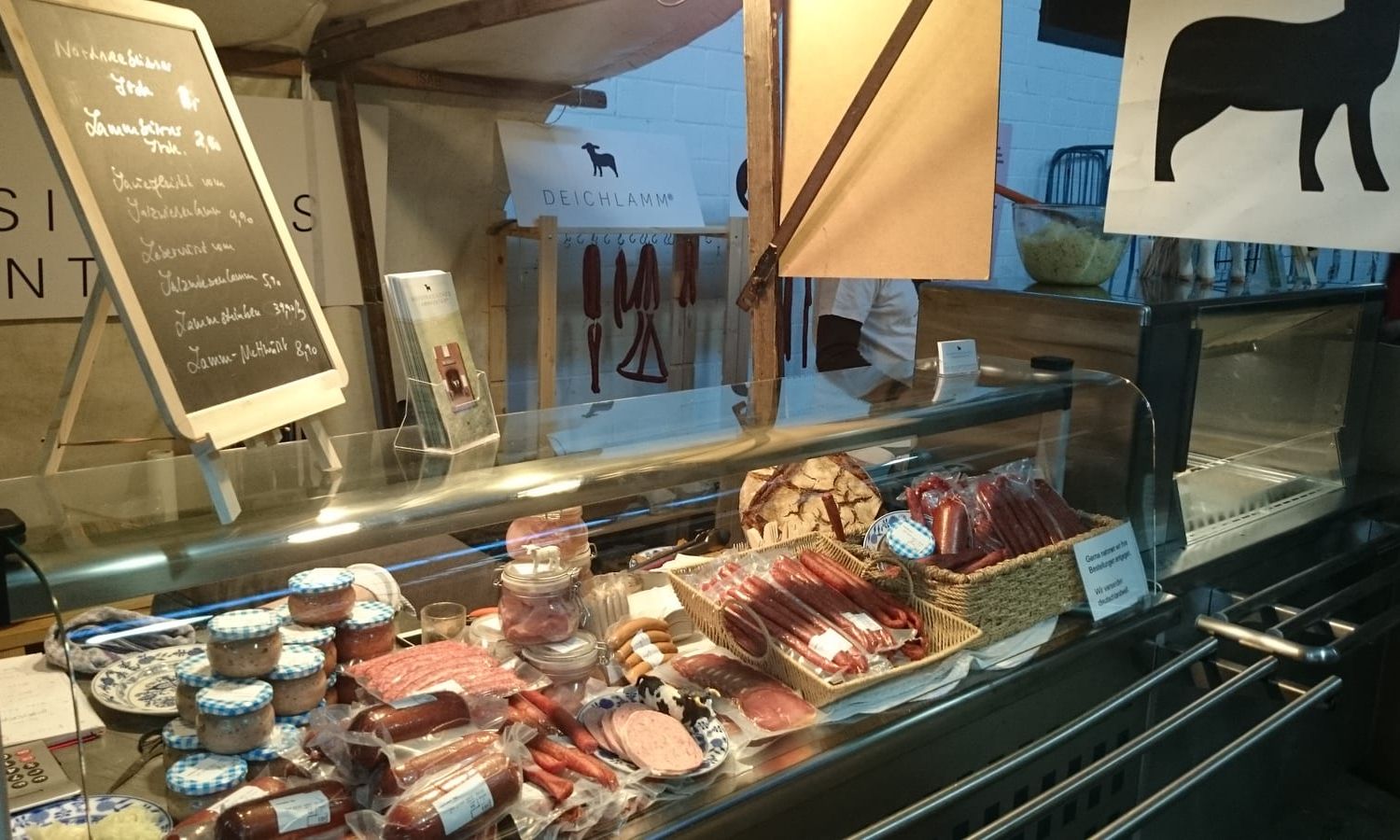
A stall in Berlin’s Markthalle Neun, a chalkboard with prices, and below it a small sign: we ship across Germany, orders welcome. Plenty of online shops start like that, with email orders and bank transfers, until the owner decides it is time for a real shop.
The tech part is quick. The work is in the legal duties that begin with your first sale to a consumer, and several of them changed in 2025 and 2026. If you sold online in the UK or the US before, expect more paperwork and stricter wording rules.
Shopify, WooCommerce or a marketplace?
The three routes differ less in price than in how much technology you want to be responsible for.
| Criterion | Shopify | WooCommerce | Marketplace (Etsy, Amazon, eBay) |
|---|---|---|---|
| Tech and updates | provider | you or a contractor | provider |
| Running costs | subscription + fees | hosting + plugins | commission |
| You own customer data | partly | ||
| You maintain legal texts | partly | ||
| Works without prior skills | partly | ||
| Customers find you without ads | partly |
In October 2026 Shopify’s pricing page showed its Basic plan at 19 US dollars a month on annual billing and 27 dollars on monthly billing. If you use a payment provider other than Shopify Payments, Basic adds a 2 percent fee per sale.
WooCommerce is a free WordPress plugin, but you need hosting, a theme and often paid extensions for shipping labels or invoices, plus someone to run updates. Marketplaces take care of the tech and some of the customer acquisition, in exchange for commission and most of the customer relationship.
Our take: to test demand with a few products, start on a marketplace or Shopify. WooCommerce makes sense if you already run WordPress and someone maintains it reliably.
Duties that start with your first sale
- Impressum under section 5 DDG, one click from every page
- Privacy policy under Article 13 GDPR, covering payment and shipping providers
- Withdrawal information with model withdrawal form, 14-day period
- Electronic withdrawal function labelled „Vertrag widerrufen“ (section 356a BGB)
- Order button reading „zahlungspflichtig bestellen“ or equally clear (section 312j BGB)
- Prices shown including VAT, plus unit prices for goods sold by weight or volume
- LUCID packaging registration and participation in a dual system
- Shipping costs and delivery time shown before checkout starts
Two of these are new or have changed recently.
The electronic withdrawal function in section 356a of the German Civil Code requires that consumers can withdraw directly through your shop. The function must be labelled “Vertrag widerrufen” or something equally clear, easy to find, and available throughout the withdrawal period. After the customer enters their name and identifies the contract, a “Widerruf bestätigen” button sends it, and you must confirm receipt promptly on a durable medium such as email. The rule comes from an EU directive that applies from 19 June 2026. Check whether your shop software already supports it. Many systems need an update or a plugin.
The link to the EU’s online dispute resolution platform, by contrast, is history. The platform was switched off in July 2025.
Packaging: register before the first parcel
If you ship packaged goods to private customers, you must register with the Central Agency Packaging Register in its LUCID database before the first shipment, and pay into a dual system for the packaging. That covers the shipping box and the filler, not just product packaging. Registration is free. The dual system fee depends on volume and material.
Berlin’s Chamber of Skilled Crafts also points to the EU Packaging and Packaging Waste Regulation (PPWR), whose requirements apply in stages from 12 August 2026. For small sellers the main change for now is documentation. Ask your dual system provider what applies to you.
Accessibility: who is affected
The German Accessibility Act (BFSG) has applied since 28 June 2025. Shops where consumers conclude contracts count as e-commerce services and must, in principle, be accessible.
Micro-enterprises providing services are exempt under section 3(3) BFSG. The law defines them as having fewer than ten employees and annual turnover or balance sheet of no more than 2 million euros. A three-person Berlin shop usually falls outside the rules. That exemption is not a reason to ignore accessibility altogether. Readable fonts, alt texts for product photos and a checkout that works with a keyboard also help older customers and anyone shopping on a cracked phone screen. Keep an eye on it as you grow, because breaches can be fined up to 100,000 euros under section 37 BFSG.
Click and collect, and food
Some Berlin shops start with online ordering and in-store pickup. Legally that changes less than you might think. If the contract is concluded entirely through the shop, it is a distance contract and the withdrawal right generally applies even when the customer collects in person.
Food has an important exception. Goods that spoil quickly have no withdrawal right under section 312g(2) BGB. Bread, fresh meat or flowers qualify. Honey or coffee usually don’t.
Anyone selling food, online included, must also register as a food business with the local food safety authority, which in Berlin is the district office. The market stall from the introduction will have done that. A new online shop for homemade jam often hasn’t.
VAT: small business scheme or not?
Since 2025 the German small business scheme (Kleinunternehmerregelung, section 19 VAT Act) applies if turnover did not exceed 25,000 euros in the previous year and will not exceed 100,000 euros in the current one. For a new shop that can be attractive, since consumers care about the final price, not the VAT inside it.
- Price paid by the consumer
- €39.90
- Standard VAT: 19 % contained in the price
- €6.37
- Standard VAT: net revenue
- €33.53
- Small business scheme: revenue, no VAT deducted
- €39.90
- Difference per sale
- €6.37
Simplified, before shipping and fees. Small businesses under the scheme cannot reclaim input VAT on purchases.
The catch: if you buy a lot of stock or equipment, you lose the input VAT refund. And once your sales to consumers in other EU countries exceed 10,000 euros a year in total, the destination country’s VAT applies, handled through the One-Stop-Shop procedure at the Federal Central Tax Office. Get a Steuerberater to look at your numbers before deciding.
From market stall to shop in six steps
- Register the businessWith the district office, in Berlin online via the service portal.
- Pick the platformMarketplace to test, Shopify or WooCommerce for your own shop.
- Add legal textsFrom a lawyer or a legal text service with automatic updates.
- LUCID and dual systemBefore the first parcel to a private customer.
- Test orderFull run including a withdrawal through the new function.
- Go liveAnd watch the first orders closely.
For local customers, link the shop from your Google Business Profile. If you need a plain business website first, see our breakdown of small business website costs.
Once you handle a few hundred orders a month, connecting shop, till and bookkeeping becomes the next job. Our guide to bookkeeping software in Germany covers the accounting side. When standard plugins hit their limits, for example on an integration with your own inventory system, a team that builds SaaS platforms can help you judge whether a custom solution pays off.
Your next step: do the test order from step five before you spend money on ads. Order, withdraw through the new function and check that the confirmation email arrives. Whatever breaks there would otherwise break for a real customer.
Questions people ask
Can I run a German online shop with English-only pages?
Nothing forces the shop to be in German, but consumer information must be clear and understandable to your customers. If you target German consumers, German legal texts are the safer choice, and many sellers offer both languages.
Do I need to register a business?
Selling goods is normally a trade, so you register it (Gewerbeanmeldung) with the district office. In Berlin that can be done online through the city's service portal.
Is the EU ODR link still required?
No. The EU shut down its online dispute resolution platform in July 2025 and dropped the linking duty. Remove old references from your legal notice and terms.
Does my small shop have to be accessible?
Shops selling to consumers fall under the German Accessibility Act, but micro-enterprises with fewer than ten staff and at most 2 million euros turnover or balance sheet are exempt.